
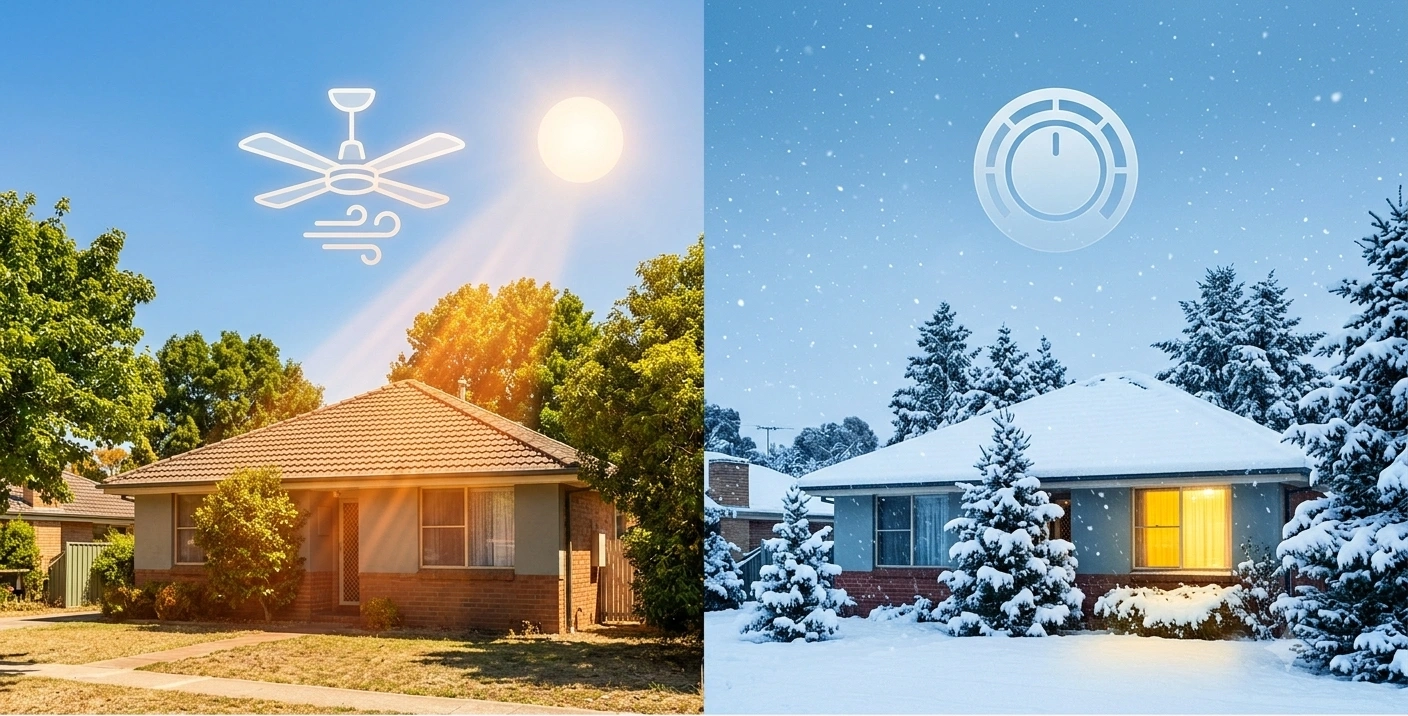
Your electric bill doesn’t have to swing wildly with the seasons. Heating and cooling typically make up close to half of a home’s energy use, which means a few targeted changes can shave real money off your bill year-round. Here’s what actually works, split out by season.
Summer: keep cool without cranking the AC
- Set your thermostat to 78°F (25°C) when you’re home and a few degrees higher when you’re out — every degree lower can add 1-3% to your cooling costs.
- Use ceiling or box fans alongside the AC. Fans let you raise the thermostat a couple degrees while feeling just as cool, at a fraction of the electricity cost.
- Close blinds or curtains on sun-facing windows during the day to block heat before it enters the room.
- Run dishwashers, dryers, and ovens in the early morning or evening so their heat doesn’t fight your AC during peak hours.
- Clean or replace your AC filter monthly during peak season — a clogged filter makes the whole system work harder.
Winter: stay warm without overpaying
- Lower your thermostat to 68°F (20°C) while awake and 8-10 degrees lower while sleeping or away — a programmable or smart thermostat can automate this.
- Seal drafts around windows and doors with weatherstripping or caulk. Even small gaps can account for a noticeable chunk of heat loss.
- Reverse ceiling fans to spin clockwise in winter, which pushes warm air (which rises) back down into the room.
- Keep vents and radiators clear of furniture and curtains so heat can actually circulate.
- Let sunlight in during the day by opening curtains on south-facing windows, then close them at night to trap the heat back in.
Habits that help all year
- Switch to LED bulbs if you haven’t already — they use up to 75% less energy than incandescent bulbs and last far longer.
- Unplug or use smart power strips for electronics that draw “phantom” power when idle, like TVs, chargers, and game consoles.
- Wash clothes in cold water and air-dry when possible; water heating accounts for a large share of laundry energy use.
- Ask your utility provider about a free or low-cost home energy audit — many offer one, and it will pinpoint exactly where you’re losing money.
- Check if your provider offers time-of-use rates, where electricity is cheaper during off-peak hours, and shift heavy usage (laundry, dishwasher) accordingly.
None of these changes require a big upfront investment, and combined, they can meaningfully soften the summer and winter spikes on your bill. Start with the free habits — thermostat settings, curtains, and load timing — before considering equipment upgrades.