

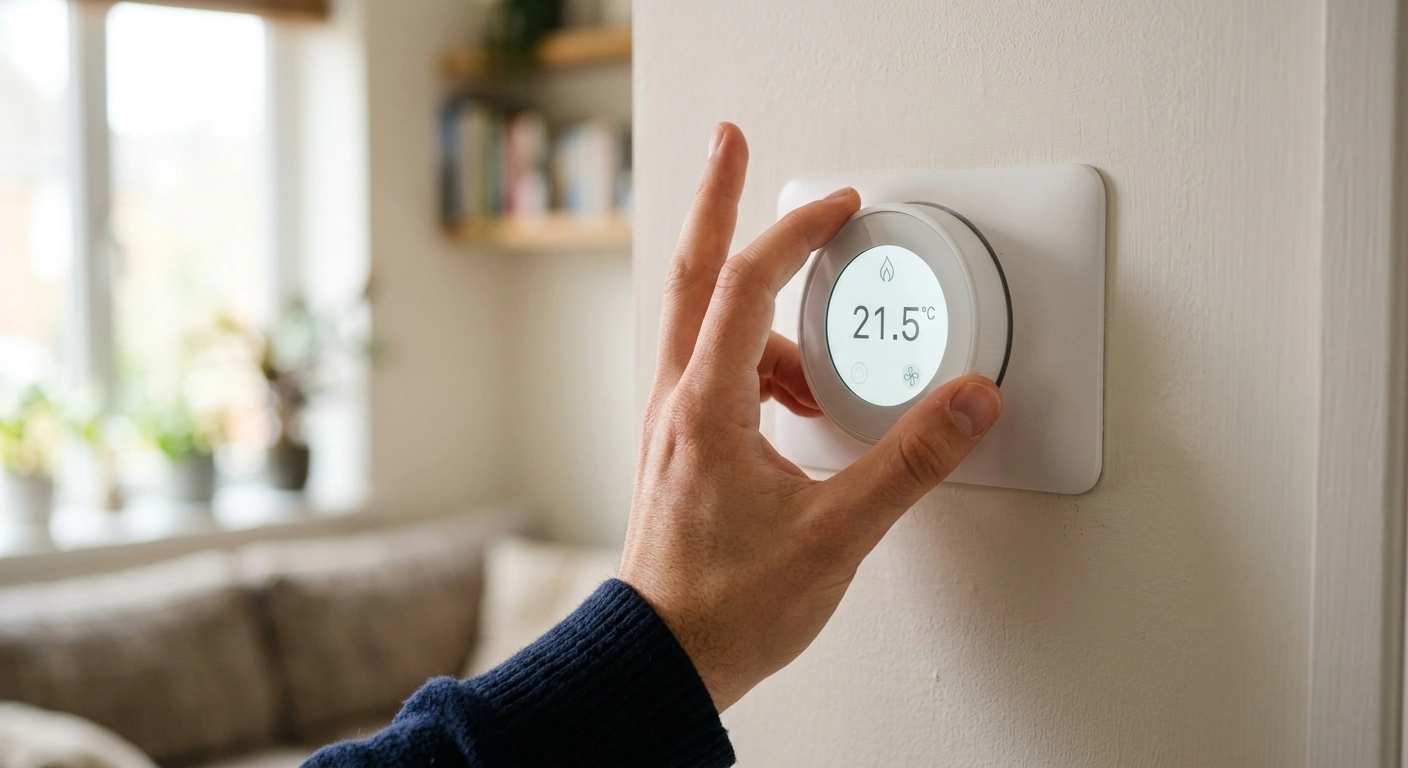
The Short Answer: It Depends on a Habit You Already Have
Smart thermostats get sold with big, round savings numbers that rarely tell the whole story. The truth is the payoff depends almost entirely on habits you already have — not the device itself.
The core value isn’t the sleek app or the voice control party trick. It’s the automatic scheduling that stops your house from heating or cooling itself while nobody’s home. That distinction is the difference between buying one and being disappointed, or buying one and genuinely noticing a difference on your next few bills.
What “Smart” Actually Means Here
Strip away the marketing and a smart thermostat does three things a regular thermostat can’t:
- Learns your schedule automatically instead of requiring a rigid manual program
- Adjusts based on location (geofencing), sensing when your phone leaves or approaches home
- Reports real usage data, turning guesswork into an actual number you can track
None of these features save you money by themselves. They save money only when they replace something you were forgetting to do manually.
What Savings Actually Look Like in Practice
If You Already Adjust the Thermostat Manually
You’re the type to lower the AC before walking out the door every morning? A smart thermostat may only save you a little — you’re essentially already doing its job by hand.
If Your House Runs the Same Setting All Day, Occupied or Not
This is where the real savings show up. A household that leaves heat or AC running at the same setting regardless of whether anyone’s home tends to see a modest but genuine percentage reduction specifically on heating and cooling costs.
Caveats Worth Knowing
- Results depend heavily on your climate — a mild climate with decent insulation has less room to save
- Results depend on your home’s insulation quality, which no thermostat can fix
- Results depend on your starting habits — the worse your current manual routine, the bigger the potential gain
Where the Case for One Is Strongest
Unpredictable Schedules
A rigid programmable schedule never quite fits real life. Shift workers, freelancers, anyone whose “home by 6pm” varies by two hours most days — a fixed program can’t adapt, but geofencing and learning algorithms can.
Households That Reliably Forget
If someone in the house consistently forgets to adjust the thermostat before leaving, automatic scheduling simply removes the human error from the equation entirely.
Rebate-Eligible Purchases
Check whether your utility offers an incentive before buying:
- $50–$100 back for enrolling a qualifying model, common across many utility rebate programs
- Ongoing bill credits for participating in demand-response programs during peak grid strain
Where It’s a Harder Sell
Already Disciplined Manually
If you rarely forget to adjust settings, the upgrade won’t move the needle much on your bill. It’ll still add convenience and remote control — just not much in savings.
Renting
You typically can’t take the device with you when you move out, unless your landlord already has one installed. A handful of newer models are designed specifically to be portable between rentals.
Incompatible HVAC Systems
Some smart thermostats simply don’t work with older systems lacking a C-wire — a low-voltage wire providing continuous thermostat power. Check compatibility before buying, not after a returned box and a wasted afternoon.
Give It Time to Actually Learn Your Schedule
Most units take a couple of weeks to build an accurate picture of your household’s real pattern. Early savings estimates shown in the app tend to be less reliable during that initial window.
A Common Mistake During Setup
Resist the urge to constantly override the schedule in the first two weeks. Frequent manual adjustments can actually slow down how quickly the device learns your genuine pattern.
What Actually Matters When Shopping for One
- HVAC compatibility — confirm your system type and C-wire availability before buying
- Geofencing — genuinely useful for irregular schedules, not just a gimmick
- Energy usage reports — turns “this should be saving money” into an actual trackable number
- Utility rebate eligibility — most utilities publish an approved-model list directly on their site
Renters: Check Before You Buy
If you’re renting, ask your landlord before installing anything — some smart thermostats replace the existing unit entirely, and swapping it back before move-out becomes its own small project if you didn’t keep the original hardware.
The Honest Verdict
A smart thermostat is generally worth it if your current routine tends to leave the house heated or cooled while it’s empty. The automatic scheduling simply does, every single day without fail, what you’d otherwise have to remember to do yourself.
For households that already have that discipline built in manually, the upgrade is more about convenience and remote control than genuine savings — which is still a reasonable enough reason to buy one, just a different reason than the marketing usually leads with.