

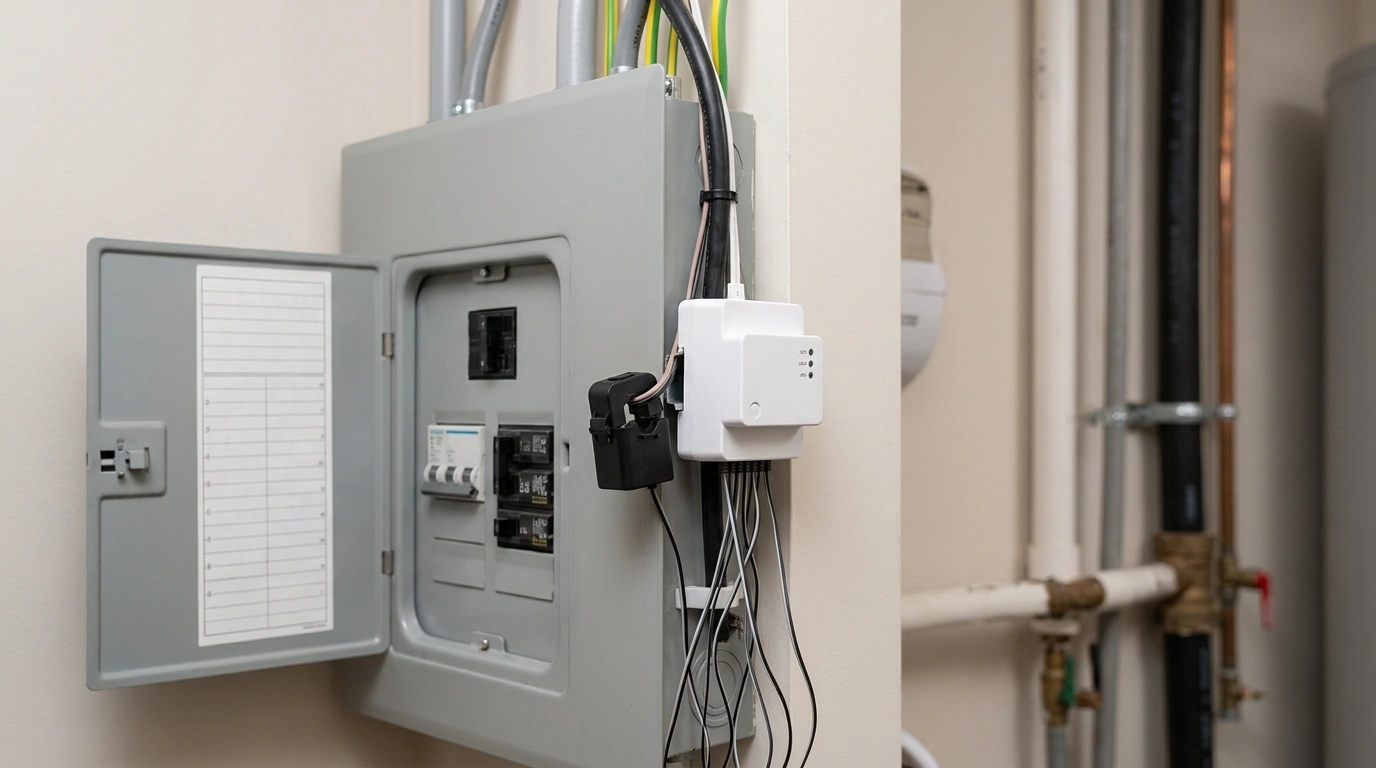
A home energy monitor connects to your electrical panel and shows you something your utility bill never has: real-time and historical usage, often broken down circuit by circuit, so you can actually see which appliances are driving your costs instead of guessing.
The Part Nobody Puts on the Box
A monitor doesn’t reduce your bill by itself. It only provides information. Every dollar saved comes from what you actually do with it.
- Noticing a device pulling far more power than it should
- Catching a failing appliance before it dies completely and forces an expensive emergency replacement
- Finally understanding which specific habits cost you the most instead of just suspecting it vaguely
Buy one and never open the app again, and you’ve produced exactly zero savings, no matter how sophisticated the hardware.
Where the Data Actually Pays Off
Catching a Struggling Appliance Early
It shines when it flags an appliance pulling unexpectedly more power than it should — an aging fridge, a struggling water heater, an HVAC system working harder than it needs to.
Spotting Phantom Loads
It’s good at spotting phantom loads from electronics left plugged in around the house, the same category of use a smart plug is built to address.
Verifying an Upgrade Actually Worked
It’s genuinely useful for confirming whether an efficiency upgrade you already made actually worked, comparing usage before and after a new HVAC system or a batch of LED replacements — turning an assumption into a verified result.
Where It Tends to Just Sit There
- If you’re honestly unlikely to act on the data — plenty of people install one, check it obsessively for two weeks, then never look again
- Older homes with panels incompatible with certain installation types may need an electrician just to get set up, adding cost before you’ve even started
- If your goal is really just fixing one specific high bill and you already know the cause, skip the monitor and go straight to the fix
What Installation and Cost Actually Look Like
Simple Whole-Home Monitors
- Clip onto the main incoming power lines
- Give you a single whole-home number
- Often installable without an electrician in under an hour
Circuit-Level Monitors
- Break usage down by individual circuit
- Typically require professional installation since they involve working inside the panel
- Cost reflects that added complexity
Be honest about which detail level you actually need. A whole-home number often catches a major anomaly just fine; circuit-level detail suits households specifically trying to optimize room by room.
What to Actually Look For If You Get One
- Historical trend tracking — comparing month to month or season to season tells you far more than a single snapshot
- Alerts for unusual spikes — catching a failing appliance early before it becomes a bigger repair, working passively without requiring you to check the app
- Circuit-level detail — worth paying for only if you’re willing to install the more involved hardware it requires
The Bottom Line
A home energy monitor is best thought of as a diagnostic tool rather than a savings device in its own right — its entire value depends on whether you’re actually willing to act on what it shows you, month after month.