

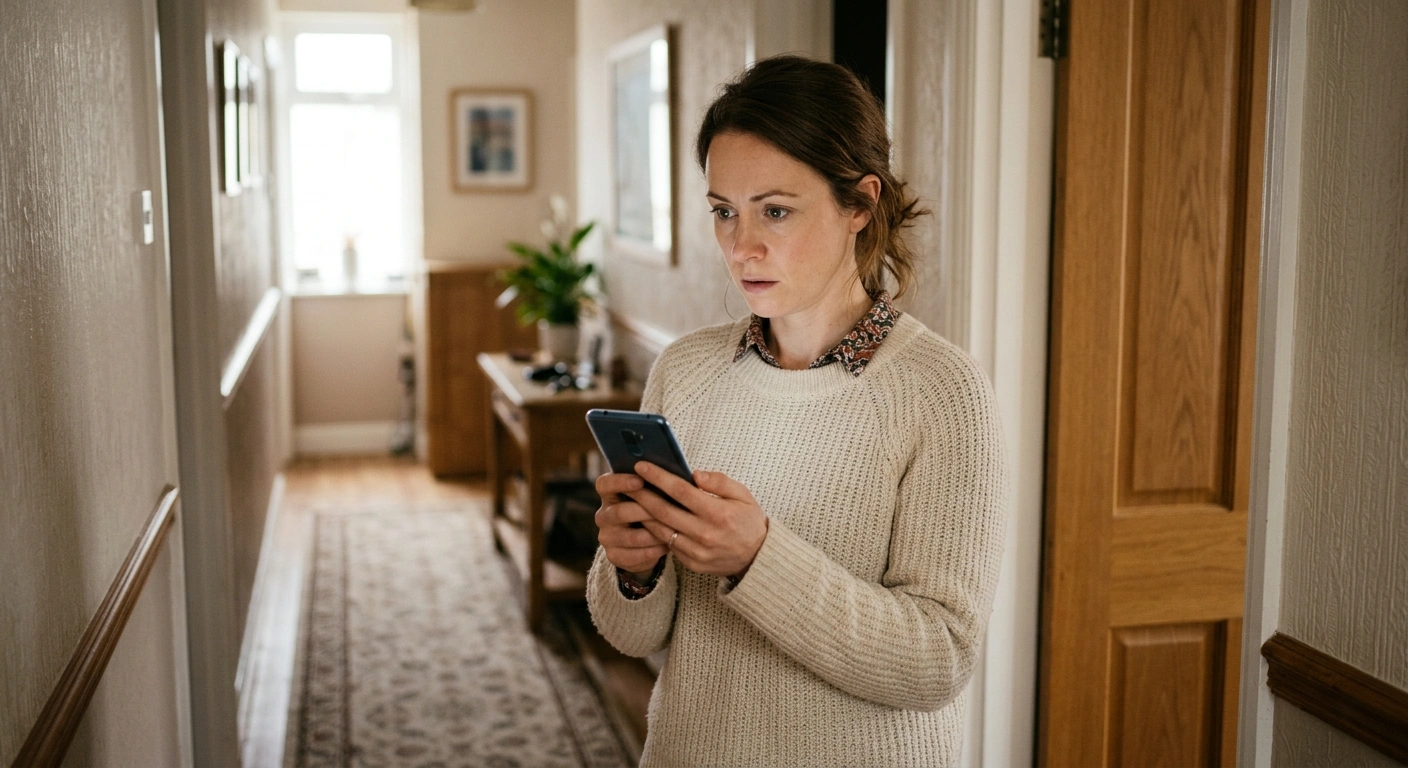
A caller says your power gets shut off within the hour unless you pay right now. Your stomach drops. That’s the entire scam, working exactly as designed.
Utility scams succeed because they create panic, and panic makes people skip the one step that would expose them instantly — actually verifying who’s on the line.
The Patterns Worth Recognizing on Sight
- The urgent shutoff call — insisting service gets cut within the hour unless you pay immediately, usually demanding a prepaid debit card, gift card, or cryptocurrency
- The door-to-door “inspector” — claiming to represent your utility, asking to inspect your meter or verify account details
- The fake bill link — a text or email with a fake overdue-bill link built to harvest your login or payment info
- The too-good discount — an unsolicited call offering a discount that supposedly requires immediate payment or your account number to “lock in”
Some more elaborate versions even reference a plausible-sounding recent bill amount, guessed or pulled from a data breach, to sound more convincing than a generic script would.
The Red Flags Worth Memorizing
- Real utilities don’t ask for gift cards, cryptocurrency, or payment through a personal payment app
- Extreme urgency is a major tell, since real disconnections require written notice and a much longer timeline than “within the hour”
- Be wary of anyone asking you to confirm a full account number or Social Security number on a call you didn’t initiate
- Caller ID proves nothing — scammers can spoof a real utility’s number closely enough to fool almost anyone glancing at the screen
Scammers Pay Attention to Timing
Weather Events
Extreme weather — a heat wave, a cold snap, the aftermath of a storm — sees a spike in scam attempts, since people are already anxious about their service.
New Movers
Scammers know a household setting up service for the first time has nothing to compare a caller’s claims against.
Not Every Scam Threatens — Some Flatter
Some scams skip the fear entirely and offer an unusually attractive discount or rebate instead, in exchange for your account number or a small “processing fee.”
- Harder to spot precisely because there’s no panic to trigger suspicion
- Arrives as a friendly, low-pressure pitch
- Same rule applies regardless of tone: unsolicited offer asking for account details or payment before you’ve verified through official channels gets the same skepticism as a threatening call
What to Actually Do
- Hang up or close the door
- Call your utility directly using the number on a past paper bill or their official website — never a number the caller gave you
- Never hand over payment info or account numbers to someone who reached out first
- If someone at your door claims to be a utility employee, ask for ID — legitimate reps carry it and will wait patiently while you verify
Protecting Elderly Family Members
Elderly relatives get targeted disproportionately, whether from unfamiliarity with digital payment methods or simple trust in an authoritative-sounding caller.
- Have a specific conversation with an older family member living alone
- Establish a simple rule: hang up, call a trusted person, never act on the spot
- A house rule — no utility payment happens without calling someone first — can prevent real damage
If You Think You’ve Already Been Caught Out
- Contact your real provider immediately to confirm account status
- Report it to the FTC at reportfraud.ftc.gov
- If money changed hands, call your bank right away to flag potential fraud
- A police report is worth filing too, particularly for a significant amount
The best defense doesn’t require memorizing every variation — just one habit: hang up, call back on a number you already trust.