

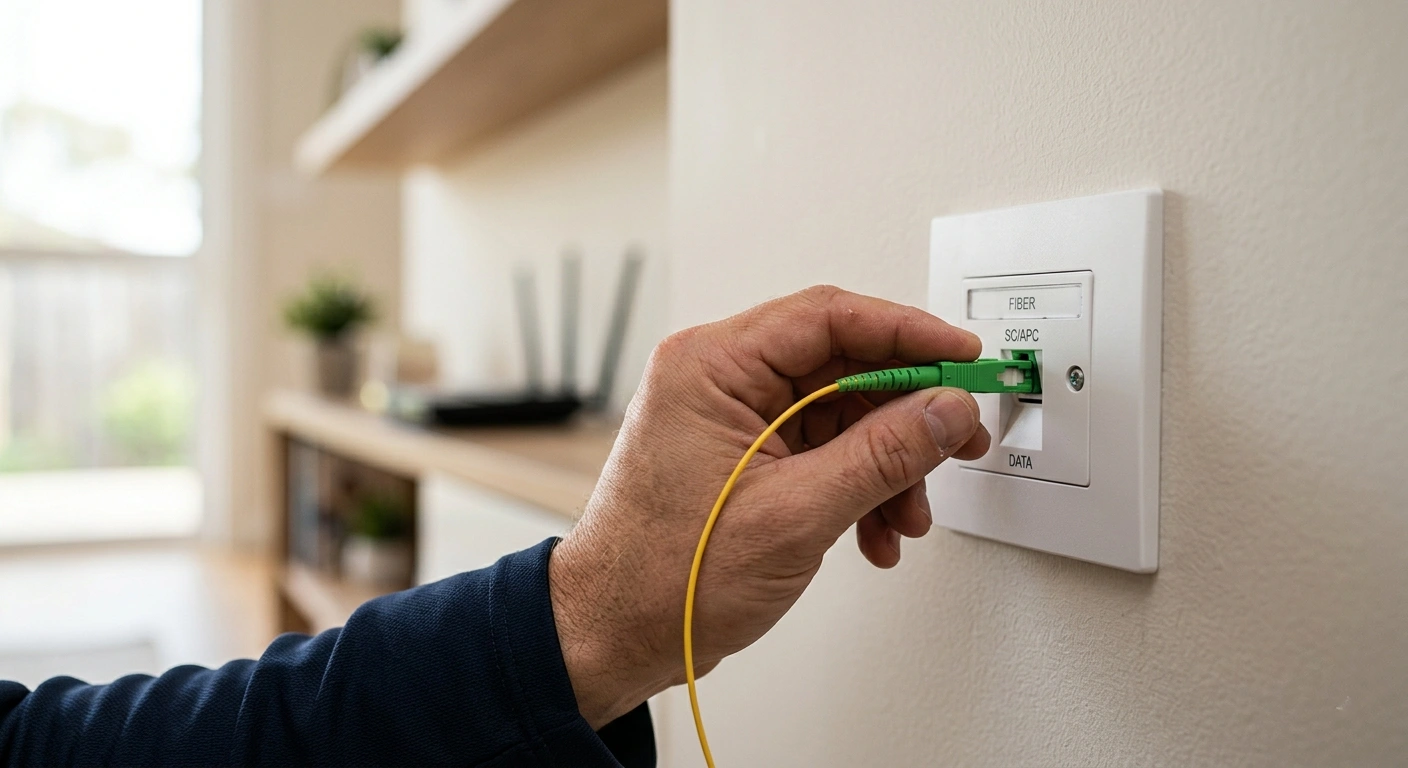
Cable and fiber sound like a technical debate. It’s really one simple difference with a lot of practical fallout: cable rides over the same coaxial lines built for television decades ago; fiber sends your data as pulses of light through thin glass. Everything else traces back to that.
The Upload Gap You Don’t Notice Until It Matters
Cable plans get marketed around big download numbers, but upload speeds tend to lag far behind.
Where This Shows Up
- Video calls, especially group calls with several participants
- Uploading large files — photos, videos, work documents
- Working from home while someone else streams in another room
A cable plan advertising 500 Mbps download might only offer 20 Mbps up — plenty for browsing, visibly strained the moment two things compete for bandwidth at once.
Fiber’s Advantage Here
Fiber typically runs symmetrical: uploads move as fast as downloads. It quietly solves a frustration a lot of cable customers never realized they had until they switched.
Why Cable Crawls at 8pm
Cable connections share a neighborhood node.
- When the whole block settles in to stream after dinner, speeds dip
- A phenomenon plenty of cable customers have lived through without ever knowing why
- Fiber isn’t fully immune to congestion, but dedicated capacity per household makes the predictable evening slowdown far less common
Does Fiber Even Reach You?
None of this matters if fiber simply isn’t an option.
Coverage Reality
- Cable still covers a much broader stretch of the country
- Fiber, despite expanding fast, still has real gaps
- Older neighborhoods often lag, since digging new infrastructure is expensive and disruptive
- Availability can genuinely differ block by block within the same city
Check your specific address rather than assuming.
Price, Installation, and What Doesn’t Show Up in the Marketing
Pricing
- Entry-level cable sometimes undercuts entry-level fiber slightly
- That gap tends to close or reverse once you move up a tier
Installation
- Cable installation is usually quick, since infrastructure’s already in place
- Fiber installation can take longer if it hasn’t previously reached your address
- Occasionally requiring a new line run from the street — worth asking about timelines if you’re on a move-in deadline
Gaming vs. Streaming: Does the Difference Actually Show Up?
For Gaming
Fiber’s lower latency and lighter congestion genuinely show up during peak hours, particularly for competitive online gaming where milliseconds matter.
For Streaming
Cable and fiber perform comparably once you’re above a baseline speed — even for 4K content — since streaming forgives small latency differences far more than real-time gaming does.
Reliability When the Weather Turns
- Fiber lines generally resist the kind of interference that can degrade a cable signal
- Fiber infrastructure tends to be newer overall, sometimes translating to fewer unexpected outages
- Both rely on the same power grid for in-home equipment — a power outage takes down either connection unless you’ve got battery backup for your router and modem
Making the Call
Choose Fiber If:
- It reaches your address
- Your household does remote work, large uploads, or has several heavy users at once
Choose Cable If:
- Fiber isn’t available yet
- Your usage leans toward standard streaming and browsing
Either way, compare actual plans at your specific address. The theoretical advantages only matter if the plan in front of you actually delivers them.
A Side-by-Side Snapshot
- Upload speed: Fiber wins clearly — symmetrical speeds vs. cable’s typically weaker upload
- Evening reliability: Fiber wins — dedicated capacity avoids neighborhood node congestion
- Availability: Cable wins — broader coverage across the country overall
- Entry-level price: Roughly even, cable sometimes slightly cheaper at the base tier
- Installation speed: Cable wins — infrastructure is typically already in place
Questions Worth Asking Before You Sign Up
- What’s the actual upload speed at this specific tier, not just the download number in the ad?
- Is there a data cap, and if so, what happens when you hit it?
- What’s the price after any promotional period ends, in writing?
- Is professional installation included, or is that a separate charge?
- What’s the early termination fee if you need to cancel mid-contract?
If You’re Torn and Both Are Available
When fiber and cable both genuinely serve your address at similar prices, fiber is generally the safer long-term bet — better upload performance, more consistent evening speeds, and infrastructure built for future demand growth rather than retrofitted from an older technology. The exception is if a specific cable promotion offers meaningfully more value for your particular usage pattern, in which case it’s worth taking on its own merits rather than assuming fiber wins by default.
What About 5G Home Internet as a Third Option?
Increasingly, a third option sits alongside cable and fiber in many areas — 5G-based home internet delivered over cellular networks rather than a wired connection.
- Installation is typically the fastest of all three — often just plugging in a receiver, no technician visit required
- Speeds can be competitive with cable in areas with strong 5G coverage
- Performance depends heavily on cellular network congestion, similar to the trade-off with cellular home internet in rural areas
Worth including in your comparison if it’s available at your address, particularly if you value fast, simple setup over squeezing out the absolute best possible speed.