

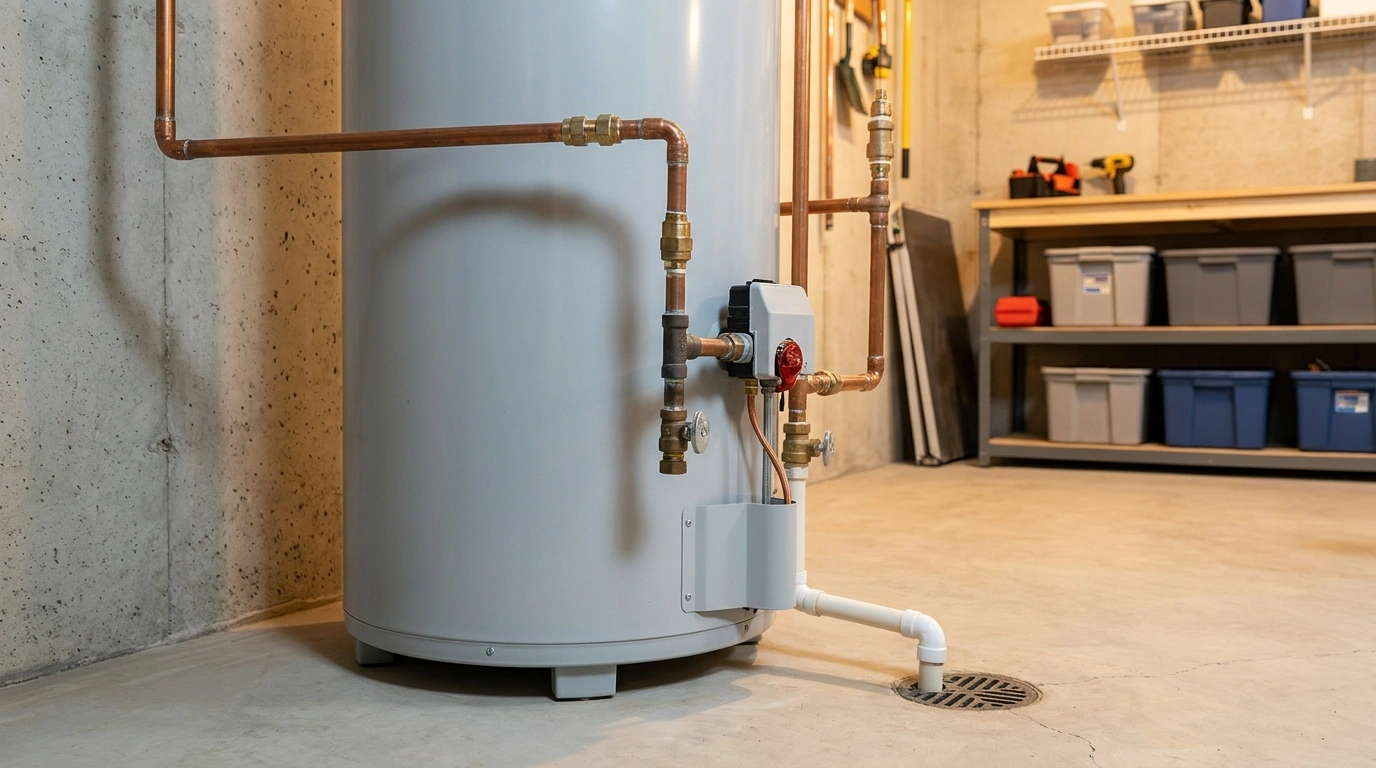
A cold shower on an ordinary morning has a way of turning into an immediate assumption that the water heater has died. Before pricing replacements, rule out the boring, easy explanations first.
Electric Water Heater
- Start at your breaker panel, looking for one labeled for the water heater that’s tripped
- Many electric units also have a reset button on the tank itself, tucked behind a small access panel
- A tripped high-limit switch cuts power there until manually reset
If the breaker trips again shortly after resetting, that usually signals a failing heating element. Time to call a technician rather than keep flipping the switch, since repeatedly resetting a genuinely faulty element risks a bigger electrical problem.
Gas Water Heater
- Check whether the pilot’s actually lit — most units have a small viewing window
- Won’t stay lit no matter how many times you relight it? The thermocouple, a small safety sensor, may need replacing
- A common and generally inexpensive repair
Also worth confirming your home’s broader gas supply is on and other gas appliances work; if they’re not either, you might be looking at a wider service issue rather than the water heater specifically.
Lukewarm Instead of Stone Cold
- Sediment buildup at the bottom of the tank quietly reduces efficiency over time, especially with hard water
- A failing element (electric) or a partially blocked burner (gas) can produce weak heat rather than none
- Double-check the thermostat setting itself — an easy dial to bump without noticing
Sometimes It’s Not Broken, Just Too Small
A standard 40 or 50-gallon tank comfortably serving two people can run dry fast if a third roommate moves in, or if back-to-back showers hit during a busy morning.
- Not a malfunction — a mismatch between capacity and demand
- Space out hot water use for a day or two and see if the pattern changes before assuming something’s actually broken
Narrowing It Down
- Hot water missing from just one fixture? More likely a local valve or fixture issue — check whether the shutoff valve under that sink or behind that shower is fully open
- Every faucet running cold? The water heater, or its power or gas supply, is the far more likely culprit
When It’s Time to Bring in a Professional
- Repeated breaker trips
- A persistent gas smell
- Visible leaking or rust around the tank
- A unit past 10 to 12 years old
Rust-colored water or visible corrosion often signals a tank nearing the end of its life, and patching small issues on an aging unit sometimes costs more than replacing it before it fails completely and causes water damage.
Tankless Systems: A Different Set of Quirks
Flow Sensor Issues
A unit can fail to fire if the flow sensor isn’t detecting enough water flow, common with low-flow fixtures that don’t quite hit the minimum activation threshold.
Mineral Buildup
Especially in hard water areas, mineral buildup in the heat exchanger is a frequent culprit — most manufacturers recommend a regular descaling flush specifically to prevent it.
Cycling Hot and Cold
Unpredictable temperature cycling rather than failing outright usually points to scale buildup rather than a bigger component failure.
Most “no hot water” mornings trace back to something genuinely simple — a tripped breaker, an unlit pilot, a small sensor gone bad — and don’t automatically mean the whole unit needs replacing.